Image
Category
Collection
Maker
Object type
Place
Material
Date
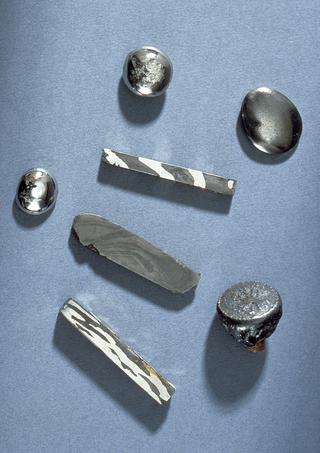
Experimental steel alloys made by Michael Faraday (1820-1824)

Experimental steel alloys made by Michael Faraday (1820-1824)

1820-1824

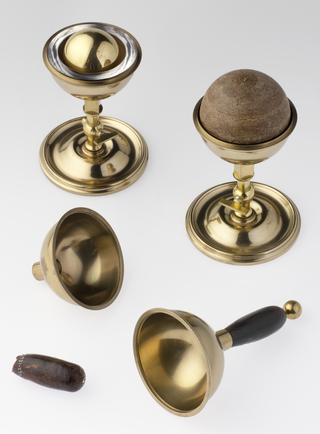
Faraday's specific inductive capacity apparatus, 1837, replica

Faraday's specific inductive capacity apparatus, 1837, replica

1837

Faraday's coil and magnet apparatus, 1831, replica

Faraday's coil and magnet apparatus, 1831, replica

1831

Miniature knife, by Michael Faraday, 1819-1824

Miniature knife, by Michael Faraday, 1819-1824

1819-1824

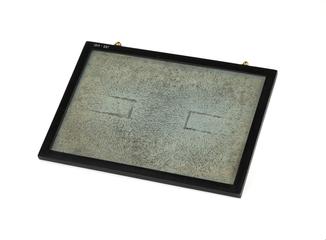
Pattern of lines of force produced by Faraday, about 1852

Pattern of lines of force produced by Faraday, about 1852

1851-1855

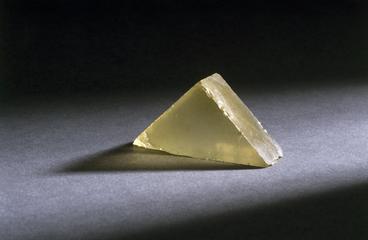
Specimen of optical glass containing "borosilicate of lead" prepared by Faraday

Specimen of optical glass containing "borosilicate of lead" prepared by Faraday

1824-1830

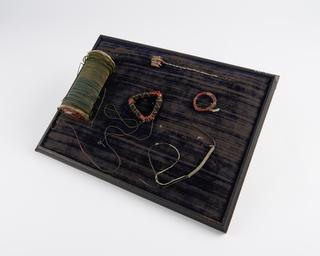
Five experimental coils used by Faraday, 1820-1850

Five experimental coils used by Faraday, 1820-1850

1821-1850

Faraday's Earth inductor, 1851, replica

Faraday's Earth inductor, 1851, replica

1851

Three magnetic line of force patterns made by Faraday and given to a friend

Three magnetic line of force patterns made by Faraday and given to a friend

Two sealed glass tubes containing liquid benzene (C6H6) and perchlorethane (C2Cl6) mounted on board. Prepared by Michael Faraday and taken from his cabinet, 1825-1867.

Faraday Samples, Benzene and Perchlorethane, 1825-1867

1825-1867

Replica of Faraday's induction coil, 1831

Faraday's induction ring (replica), 1831

1831

[Letter, 1824] Mar 19, Royal Institution [to] Frederick Pollock/Michael Faraday, [re his experiments on the condensation of gases, etc. (as published in the Philosophical Transactions of the Royal Society, 113, 1823, 189-198). Mentions giving evidence on the relative advantages of oil gas and coal gas to a House of Commons Committee which included Pollock's brother, David.]

Letter, 1824 Mar 19

1824

[Letter] 1863 Jun 29 [to his nephew] Malcolm [Giles] / M. Faraday. [2p. on 1 leaf, holograph signed. Embossed with Royal Institution of Great Britain. Praises his school work and sends him sixpence]

Letter 1863 Jun 29 [to his nephew] Malcolm [Giles], M. Faraday

1863 Jun 29

[Letter] 1837 Jul 13, R[oyal] Institution [to] Revt. Prof. Henslow / M. Faraday. [As a member of the committee of the Faculty of Arts for Chemistry, Animal and Vegetable Physiology, asking Henslow's opinion of the revised minimum requirements for the degree of B.A. and the amount of chemistry that should be included. 2p.on 1 leaf]

Letter 1837 Jul 13

1837

Imitation Damascus steel, by Michael Faraday, 1820-1824

Imitation Damascus steel, by Michael Faraday

1820-1824

Button of steel with 48.8% rhodium, by Michael Faraday, 1820-1824

Button of steel with 48.8% rhodium

1820-1824

Button of steel with 48.6% platinum, by Michael Faraday, 1820-1824

Button of steel with 48.6% platinum

1820-1824

Button of steel with 22.7% palladium, by Michael Faraday, 1820-1824

Button of steel with 22.7% palladium

1820-1824

Platinum and steel welded, by Michael Faraday, 1820-1824

Platinum and steel welded

1820-1824

Button of pure iron, by Michael Faraday, 1820-1824

Button of pure iron

1820-1824

Platinum and steel welded, by Michael Faraday, 1820-1824

Platinum and steel welded

1820-1824

[Letter] 1822 May 26, Royal Institution, London [to A-M] Ampere, Paris / M. Faraday. [3p. on 1 leaf, holograph signed. Refers to previous correspondence of Ampere with himself and with Brewster; mentions Darblay (in London), Hachette and Laplace. Faraday receives French journals irregularly and is impatient for news, especially of Ampere's work]

[Letter] 1822 May 26

1822

Button with 1.25% rhodium, by Michael Faraday, 1820-1824

Button with 1.25% rhodium, by Michael Faraday

1820-1824

Button of iron carbide, by Michael Faraday, 1820-1824

Button of iron carbide

1820-1824

Replica of Faraday's ring

Replica of Faraday's ring

1965-1979

[Letter] 1853 May 31, Royal Institution [to an unnamed correspondent] / M. Faraday. [Concerns decay of books in the Athenaeum, caused by emission of sulphurous and sulphuric acid from gas-lamps]

Letter 1853 May 31

1853